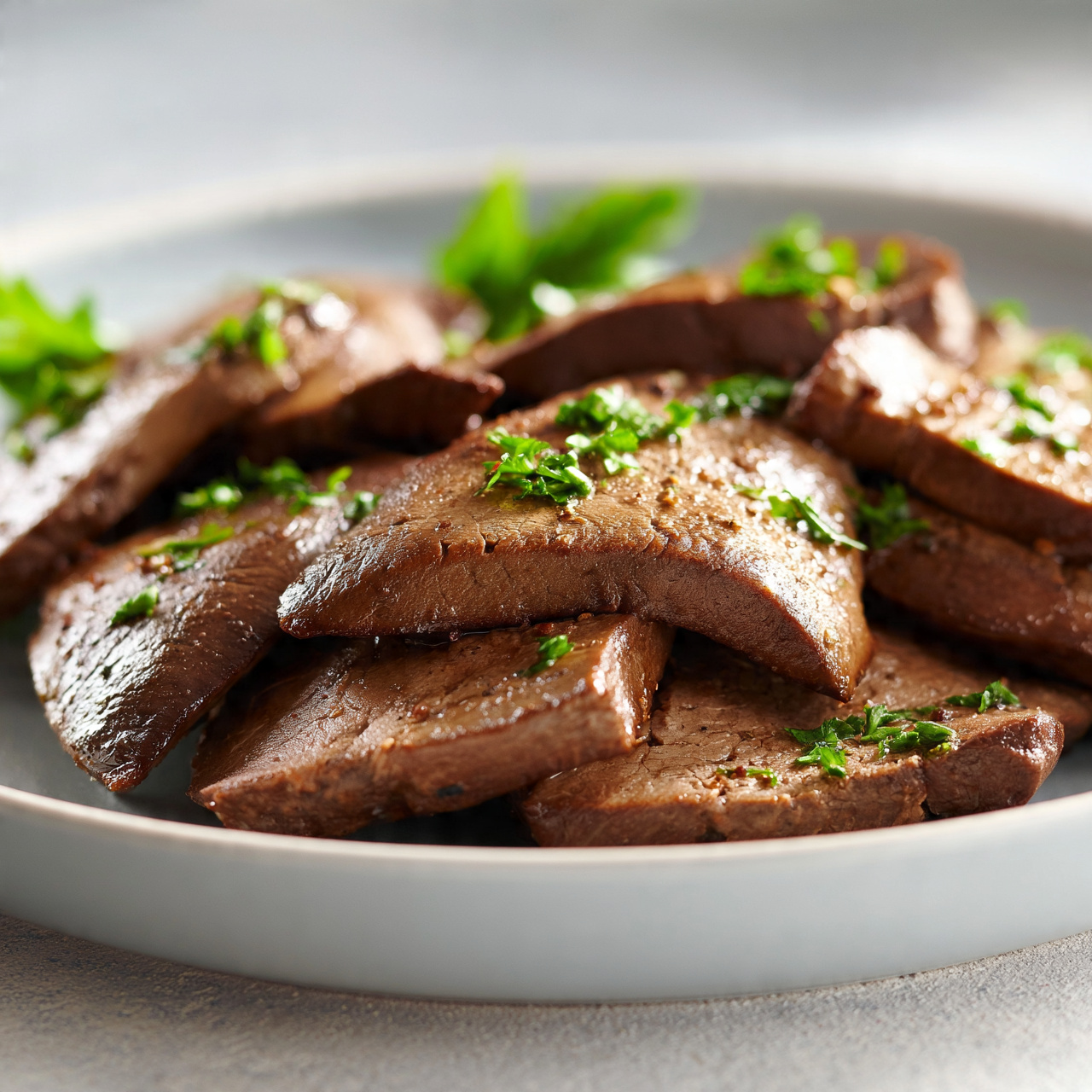
The Absolute Best Beef Liver and Onions Recipe
Learn how to cook beef liver and onions the right way: tender, flavorful, and completely free of that bitter edge. This classic organ meat recipe is a nutrient-packed dinner the whole family will actually enjoy.

The Liver and Onions Recipe That Will Change Your Mind
If the words beef liver make you instinctively wrinkle your nose, you are not alone. For a lot of people, liver carries some serious childhood baggage: gray, rubbery slabs served overcooked and underseasoned, sitting in a puddle of sadness on a dinner plate. That version of liver deserves its bad reputation. But this version? This is something else entirely.
When you prepare and cook beef liver the right way, starting with a proper milk soak, slicing it thin, dredging it lightly in flour, and searing it hot and fast in butter, you get something genuinely delicious. The inside stays tender and just barely pink. The outside develops a golden, savory crust. And buried under a mountain of slow-caramelized onions in a rich pan sauce, it becomes one of the most satisfying, deeply flavored meals you can put on a weeknight table.
This is the absolute best liver and onions recipe, and it will convert skeptics.
Why This Recipe Works
Most failed liver experiences come down to two problems: skipping the soak and overcooking. This recipe solves both deliberately.
The milk soak is the single most transformative step in learning how to prepare and cook beef liver. Milk pulls out the harsh, metallic compounds in the liver that create that overwhelmingly bitter, iron-heavy taste. After just 30 minutes submerged, the liver emerges noticeably milder. After two hours, it is almost sweet.
Hot, fast cooking is the second key. Liver is not a braise. It is not a low-and-slow situation. You want a screaming hot skillet, a quick two to three minutes per side, and the courage to pull it off the heat while there is still a blush of pink in the center. That pink disappears as the meat rests, leaving you with something tender instead of the rubbery texture that has haunted so many dinner tables.
Pairing it with deeply caramelized onions is not just tradition. The sweetness of the onions genuinely balances the savory richness of the liver in a way that makes each bite more balanced and craveable.
A Note on Sourcing and Tools
The quality of your liver matters more than almost any other protein you cook. Look for fresh beef liver or calf's liver at a good butcher counter rather than a frozen supermarket option if you can. Calf's liver is especially prized for its delicate, mild flavor, and elk liver is another excellent choice if you have access to it through a hunter or specialty market.
The right pan also makes a real difference here. A heavy cast-iron skillet holds heat evenly and gives the liver that perfect caramelized crust without steaming the meat. Thin, lightweight pans drop in temperature the moment the liver hits the surface and lead to uneven cooking.
How to Caramelize Onions the Right Way
Here is the truth about caramelized onions: they take longer than any recipe tells you. Plan for 20 to 25 minutes over medium-low heat. The patience pays off completely.
Start with two large yellow onions, sliced into thin half-moons. Melt butter and olive oil together in your skillet over medium-low heat, add the onions with a pinch of salt, and just let them do their thing. Stir every few minutes. They will go from sharp and white, to translucent and soft, to golden and jammy. That final golden stage is where all the sweetness and complexity lives.
Add the minced garlic only in the last two minutes. Garlic burns quickly and will turn bitter if you add it at the start.
Chef's Tip: You can caramelize the onions up to three days ahead and refrigerate them. On the night you are cooking, the whole recipe comes together in under 15 minutes.
The Sear: Fast, Hot, and Confident
Once your liver has soaked and your onions are golden, the actual cooking moves quickly. Pat the liver completely dry, season it well, dust it lightly in flour, and get your skillet ripping hot before the meat goes in.
Lay the slices in a single layer without crowding. Resist the urge to move them. After two to three minutes, you will see the edges beginning to change color. Flip once. Another two to three minutes, and they are done.
Do not cook liver until it is fully gray all the way through. A thermometer reading of 160 degrees F at the thickest part is your guide. Pull it, plate it, and let the residual heat finish the job.
The pan sauce comes together in the same skillet, scraping up all those beautiful browned bits with a splash of beef broth and Worcestershire sauce. It is simple and it is spectacular.
Ready to bring this whole bowl of cooked liver and caramelized onion goodness together? Here is the full step-by-step recipe:
The Absolute Best Beef Liver and Onions Recipe
Learn how to cook beef liver and onions the right way: tender, flavorful, and completely free of that bitter edge. This classic organ meat recipe is a nutrient-packed dinner the whole family will actually enjoy.
Ingredients
- 1 1/2 lb beef liver, sliced about 0.5 inch thick, soaked in milk
- 1 cup whole milk, for soaking
- 2 large yellow onions, thinly sliced into half-moons
- 3 tbsp unsalted butter, divided
- 2 tbsp olive oil, divided
- 1/2 cup all-purpose flour, for dredging
- 3 garlic cloves, minced
- 1/2 cup low-sodium beef broth
- 1 tbsp Worcestershire sauce
- 3 fresh thyme sprigs, or 0.5 tsp dried thyme
- 1 tsp kosher salt, plus more to taste
- 1/2 tsp black pepper, freshly ground
- 2 tbsp fresh flat-leaf parsley, roughly chopped, for garnish
Instruction
Place the sliced beef liver in a shallow dish and pour the milk over it. Make sure all pieces are submerged. Let it soak for at least 30 minutes at room temperature, or up to 2 hours in the refrigerator. This step is non-negotiable for removing bitterness.
While the liver soaks, melt 2 tablespoons of butter with 1 tablespoon of olive oil in a large cast-iron or heavy-bottomed skillet over medium-low heat.
Add the sliced onions and a pinch of salt. Cook low and slow, stirring every few minutes, for 20 to 25 minutes until the onions are deeply golden, jammy, and caramelized. Add the garlic in the final 2 minutes. Transfer the onions to a bowl and set aside.
Remove the liver from the milk and pat each slice completely dry with paper towels. Season both sides generously with salt and pepper.
Spread the flour on a plate and dredge each piece of liver lightly, shaking off any excess. A thin, even coating is all you need.
Increase the heat to medium-high. Add the remaining 1 tablespoon each of butter and olive oil to the same skillet.
Once the butter is foaming, add the liver slices in a single layer without crowding the pan. Cook for 2 to 3 minutes per side until browned on the outside but still just slightly pink in the center. Do not overcook. Work in batches if needed. Transfer the cooked liver to a plate and tent loosely with foil.
Pour the beef broth and Worcestershire sauce into the skillet and scrape up any browned bits from the bottom. Add the thyme and let the sauce simmer for 2 minutes until slightly reduced.
Return the caramelized onions to the skillet and stir to combine. Taste and adjust seasoning.
Nestle the liver slices back into the pan with the onions and sauce for 30 seconds just to warm through. Do not continue cooking the liver at this stage.
Plate the liver topped with a generous pile of caramelized onions, spoon the pan sauce over everything, and finish with fresh parsley. Serve immediately.
Equipment
- Large cast-iron or heavy-bottomed skillet
- Shallow dish or bowl for soaking
- Tongs
- Plate for dredging
- Paper towels
- Wooden spoon or silicone spatula
Notes
Serving, Storing, and Variations
Serving ideas: Beef liver and onions is a natural match for creamy mashed potatoes, buttered egg noodles, or a simple side of roasted green beans. The pan sauce doubles as a gravy over any of them.
Storing leftovers: Keep in an airtight container in the refrigerator for up to two days. Reheat gently in a skillet over low heat with a splash of broth. The microwave tends to toughen the liver, so use the stovetop when you can.
Variations to try:
- Calf's liver and onions uses the exact same method with a slightly shorter cook time
- Elk liver is a wonderful choice for hunters and has a slightly earthier, gamey sweetness that pairs beautifully with the caramelized onions
- Add crispy bacon strips on top for extra richness
- A splash of balsamic vinegar stirred into the pan sauce adds a welcome brightness
The Case for Eating Beef Liver
Beyond the flavor, eating beef liver regularly is one of the most efficient ways to nourish your body. It is extraordinarily high in vitamin B12, heme iron, vitamin A, folate, and copper. Traditional cultures around the world have prized organ meat recipes for exactly this reason, long before anyone called it a superfood.
If you have been curious about beef organs but were not sure where to start, this recipe is your entry point. It is accessible, familiar in structure, and genuinely delicious when made well. Once you nail it here, the whole world of organ meats opens up.