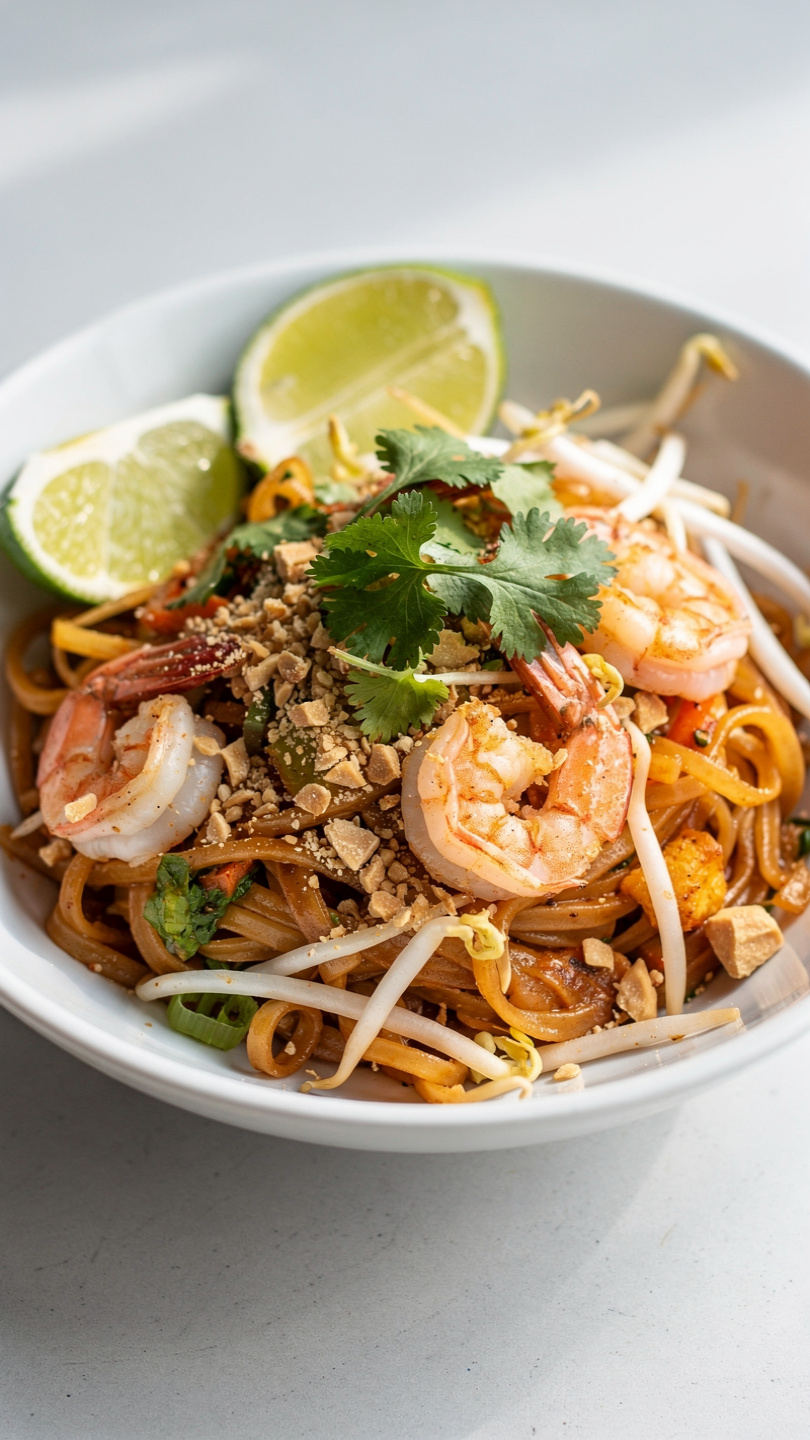
Shrimp Pad Thai (Better Than Takeout!)
This Shrimp Pad Thai is a restaurant-quality noodle recipe you can make at home in under 30 minutes, with a perfectly balanced sweet, tangy, and savory sauce that beats takeout every time.

The Shrimp Pad Thai Recipe That Actually Tastes Like the Real Thing
If you have ever ordered Pad Thai from a great Thai restaurant and thought "I wish I could make this at home," you are absolutely in the right place. This Shrimp Pad Thai recipe is one of those healthy dinner recipes that genuinely delivers on every promise. It is fast, it is deeply satisfying, and once you nail the sauce, you will never reach for the takeout menu again.
Pad Thai sits at the intersection of Asian cooking traditions and pure weeknight practicality. The combination of chewy rice noodles, plump shrimp, a jammy scrambled egg, crunchy peanuts, and that glossy, complex sauce is as close to perfect as a noodle dish gets. And the best part? It all comes together in under 30 minutes.
What Makes a Great Pad Thai? (It Starts With the Sauce)
Let's be honest. The difference between a flat, disappointing Pad Thai and one that makes your eyes light up is entirely in the sauce. Authentic Pad Thai sauce has three non-negotiable pillars: sour from tamarind, salty from fish sauce, and sweet from palm or brown sugar. Get that balance right and the rest of the dish practically makes itself.
Tamarind paste is the ingredient most home cooks skip because it feels unfamiliar. Do not skip it. It is the backbone of this dish and gives the sauce a deep, fruity tartness that lime juice alone cannot replicate. You can find it at most Asian grocery stores or order it online.
Chef's Tip: The sauce can be mixed up to 5 days in advance and stored in a sealed jar in the fridge. Having it ready to go makes this one of the easiest easy noodle recipes you will ever pull off on a busy weeknight.
The Tools and Ingredients That Actually Matter Here
Authentic Asian cooking relies on high, fast heat and the right pan. A carbon steel wok is ideal for this recipe because it distributes heat evenly and gives your noodles that subtle smokiness known as wok hei. A wide, heavy-bottomed stainless skillet works well too if you do not own a wok yet.
How to Cook Shrimp Pad Thai Like a Pro (Key Techniques)
Before you fire up the stove, there are a few techniques worth knowing that separate good Pad Thai from unforgettable Pad Thai.
Soak Your Noodles, Don't Boil Them
Rice noodles for Pad Thai should be soaked in warm, not boiling water until they are pliable but still slightly firm, usually about 20 minutes. They will finish cooking in the wok. If you boil them fully before stir-frying, they will turn to mush. This is one of the most important tips in all of Asian cooking when it comes to noodle dishes.
Cook in Stages
The golden rule of Chinese cooking and Thai cooking alike: do not overcrowd your wok. Cook the tofu first to get it golden, then the shrimp, then build the noodle base. This approach gives each ingredient proper heat contact so everything caramelizes rather than steams. Food videos cooking tutorials often skip this step and wonder why the results look sad.
Scramble the Eggs Right in the Pan
Push your noodles to one side, pour in your beaten eggs, and scramble them gently until just barely set before folding them in. You want distinct, soft ribbons of egg running through the noodles, not dry curds.
Chef's Tip: Keep a small bowl of water next to the stove. If the noodles start sticking to the wok before they are fully cooked, a splash of 2 tablespoons of water at a time will release them instantly without diluting the sauce.
Why This Qualifies as One of the Best Healthy Food Dishes
This recipe checks all the boxes for healthy dinner recipes. Shrimp is a lean, high-protein seafood option. Rice noodles are naturally gluten-free. The dish is loaded with bean sprouts, green onions, and egg for nutrients. And because you are making it at home, you control the sodium and can cut the sugar to taste. Compared to what comes in a takeout container, this is a genuinely wholesome meal that also happens to taste incredible.
If you are looking for vegetarian recipes, this dish converts beautifully. Simply double the tofu, swap the fish sauce for soy sauce or a vegan fish sauce alternative, and omit the shrimp. It is one of the most flexible healthy food dishes in the Asian cooking repertoire.
Ready to Make It? Here Is the Full Step-by-Step Recipe:
Shrimp Pad Thai (Better Than Takeout!)
This Shrimp Pad Thai is a restaurant-quality noodle recipe you can make at home in under 30 minutes, with a perfectly balanced sweet, tangy, and savory sauce that beats takeout every time.
Ingredients
- 8 oz flat rice noodles, medium width, soaked in warm water for 20 minutes until pliable then drained
- 1 lb large shrimp, peeled and deveined, tails on or off
- 3 tbsp tamarind paste, see notes for substitution
- 3 tbsp fish sauce
- 2 tbsp brown sugar, packed
- 1 tbsp oyster sauce
- 3 tbsp vegetable oil, divided
- 4 garlic cloves, minced
- 2 shallots, thinly sliced
- 4 oz extra-firm tofu, pressed and cut into small cubes
- 2 large eggs, lightly beaten
- 1 1/2 cups bean sprouts, fresh
- 4 green onions, cut into 1-inch pieces, whites and greens separated
- 1/2 cup roasted peanuts, roughly chopped, for serving
- 2 fresh lime, cut into wedges, for serving
- 1/2 tsp dried chili flakes, optional, for heat
Instruction
Soak the rice noodles in a large bowl of warm (not boiling) water for 20 minutes until they are pliable but still slightly firm. Drain well and set aside.
In a small bowl, whisk together the tamarind paste, fish sauce, brown sugar, and oyster sauce until the sugar dissolves. Taste and adjust to your preference. Set the sauce aside.
Heat 1 tablespoon of oil in a large wok or wide skillet over high heat until it is shimmering. Add the tofu cubes in a single layer and cook without stirring for 2 to 3 minutes until golden and crisp on one side. Flip and cook for another 1 to 2 minutes. Remove and set aside.
Add another tablespoon of oil to the same wok over high heat. Add the shrimp in a single layer, season lightly with a pinch of salt, and cook for 1 to 2 minutes per side until they just turn pink and curl. Do not overcook. Remove and set aside.
Add the remaining tablespoon of oil to the wok. Add the shallots and the white parts of the green onions. Stir-fry for 1 minute until softened and fragrant. Add the garlic and stir-fry for 30 seconds more.
Add the drained noodles to the wok and pour the sauce over them. Toss everything together with tongs and cook for 1 to 2 minutes, allowing the noodles to absorb the sauce. If the noodles start sticking, add 2 tablespoons of water at a time to loosen them.
Push the noodles to one side of the wok. Pour the beaten eggs into the empty space and scramble them gently until they are just set, about 45 seconds. Break them up and fold them into the noodles.
Return the cooked shrimp and tofu to the wok. Add the bean sprouts and the green parts of the green onions. Toss everything together for 30 to 60 seconds, just until the sprouts are slightly wilted but still have a crunch.
Divide among four bowls or plates. Top generously with chopped roasted peanuts, chili flakes if using, and serve immediately with fresh lime wedges on the side.
Equipment
- Large wok or wide, heavy-bottomed skillet
- Large mixing bowl (for soaking noodles)
- Small bowl (for sauce)
- Tongs or long chopsticks
- Sharp knife and cutting board
- Citrus juicer or hand squeezer
Notes
Serving, Storing, and Making It Your Own
Shrimp Pad Thai is best served immediately straight from the wok while the noodles are glossy and the bean sprouts still have their crunch. Set out small bowls of extra peanuts, lime wedges, chili flakes, and fish sauce on the table so everyone can customize their bowl.
Leftovers keep well in an airtight container in the fridge for up to 3 days. Reheat in a hot skillet with a splash of water to bring the noodles back to life.
Ways to Make It Your Own
- Spicy version: Add a tablespoon of sambal oelek or a few dried Thai chilies to the sauce.
- Extra protein: Add thin-sliced chicken thigh alongside the shrimp for a surf-and-turf version.
- More vegetables: Julienned carrots, snap peas, or baby bok choy all work beautifully and make this an even more well-rounded healthy food dish.
- Peanut-free: Swap the peanuts for toasted sunflower seeds or simply leave them off for a nut-free version.
Whether you are new to Asian cooking or a seasoned home cook looking for reliable, tasty recipes that deliver every time, this Shrimp Pad Thai is the one to bookmark, share, and come back to again and again.