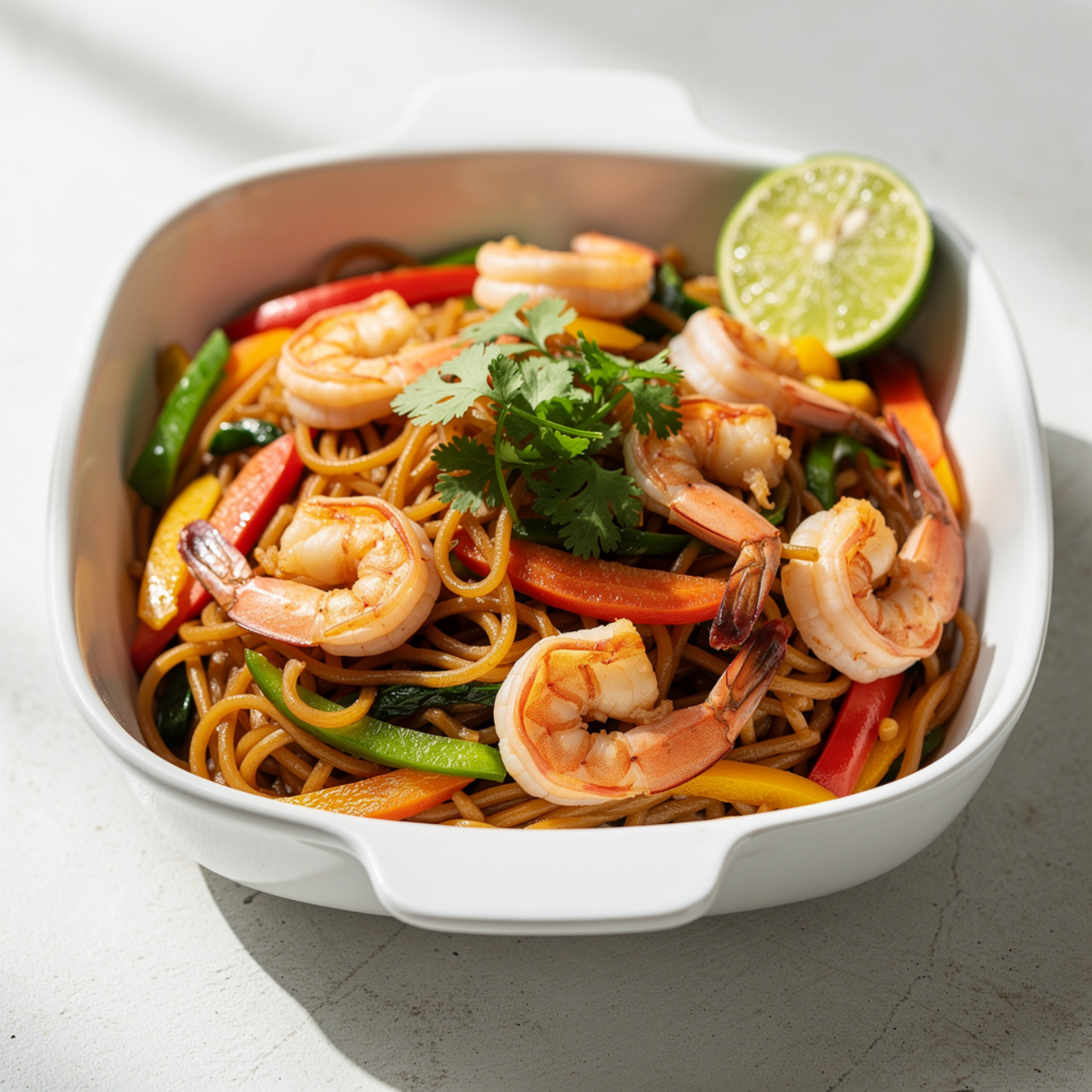
Shrimp Stir Fry with Rice Noodles (Easy Gluten-Free Recipe)
This quick shrimp stir fry with rice noodles comes together in under 30 minutes with a savory, glossy sauce and crisp vegetables. A naturally gluten-free noodle stir fry that tastes better than takeout.

The Weeknight Stir Fry That Actually Tastes Like Takeout
There is something deeply satisfying about a shrimp stir fry with rice noodles done right. The noodles should be silky and coated in a glossy, savory sauce. The shrimp should be just barely pink and tender. The vegetables should still have some snap to them. And the whole thing should come together fast enough that you are eating dinner before you would have even received a delivery order.
This easy rice noodle stir fry recipe checks every single one of those boxes. It is naturally gluten-free, built around flat rice noodles that soak up every bit of that umami-rich sauce, and it is on the table in under 30 minutes from start to finish. If you have been searching for gluten-free noodle stir fry recipes that do not taste like a compromise, this is the one.
Why Rice Noodles Are the Secret Weapon Here
Not all noodle stir fry recipes are created equal, and the noodle choice matters more than most people realize. Flat rice noodles (sometimes labeled as rice stick noodles or Asian rice noodles) have a delicate, almost slippery texture that clings to sauce in a way that wheat noodles simply do not replicate.
They are also completely gluten-free by nature, which makes this one of those rare GF rice noodle recipes that requires zero substitutions or workarounds. You are not settling for a lesser version. The rice noodle is the right noodle for this dish.
When shopping, look for medium or wide flat rice noodles. Thin rice vermicelli will work too, but you get a heartier, more satisfying bite from the wider cut.
Building the Perfect Stir Fry Sauce
The sauce is what separates a memorable gluten-free rice noodle stir fry from a forgettable one. This one leans on a combination of:
- Tamari (or coconut aminos) for that deep salty backbone
- Gluten-free oyster sauce for richness and a subtle brininess
- Rice vinegar for brightness that cuts through the richness
- Honey to balance and help caramelize everything in the hot wok
- A tiny bit of cornstarch slurry so the sauce clings to every noodle instead of pooling at the bottom of the bowl
Mix the sauce before you start cooking. Once the wok is hot and things start moving fast, you will want everything ready to pour in immediately.
Chef's Tip: Mise en place is everything in a stir fry. Have your sauce mixed, vegetables prepped, noodles soaked, and shrimp patted dry before you turn on the heat. Once you start, this recipe moves in about 8 minutes flat.
The Right Tools Make a Real Difference
For an authentic stir fry rice noodle dish, a proper wok or large skillet that can handle very high heat is genuinely important. A wide, heavy pan allows moisture to evaporate quickly, which is what gives stir-fried food that slightly smoky, restaurant-quality character known as wok hei. The right tamari or gluten-free oyster sauce also makes a significant flavor difference compared to generic alternatives.
How to Cook Shrimp for Stir Fry (Without Overcooking It)
Overcooked shrimp is rubbery and sad, and it happens in a matter of seconds. Here is how to avoid it every time:
- Dry your shrimp thoroughly. Moisture is the enemy of a good sear. Pat them dry with paper towels before they go anywhere near the wok.
- Cook them in a single layer. Overcrowding steams the shrimp instead of searing them. Use a large enough pan.
- Pull them early. The shrimp should look about 80 percent cooked when you transfer them out. They will finish warming through when you add them back at the very end.
This two-stage cooking method is the professional move that keeps shrimp tender and perfectly pink in any Asian rice noodle stir fry recipe.
Vegetables That Work Best in This Dish
The beauty of a stir fry with rice noodles is the flexibility. The combination used here (red bell pepper, snap peas, and shredded carrots) offers great color, crunch, and a mild sweetness that plays well against the savory sauce. Other excellent additions or swaps include:
- Broccoli florets (blanch briefly first for faster wok cooking)
- Baby bok choy, halved
- Mushrooms, sliced thin
- Zucchini, cut into half-moons
- Baby corn, drained and halved
The rule of thumb: cut everything to a similar, bite-sized thickness so it cooks evenly in the few minutes it spends in the hot wok.
Ready to Make It?
If you have been looking for a stir fry rice noodles recipe that is easy enough for a weeknight but impressive enough to serve to guests, this is it. Grab your wok, soak those noodles, and let's get into it. Here is the full recipe:
Shrimp Stir Fry with Rice Noodles (Easy Gluten-Free Recipe)
This quick shrimp stir fry with rice noodles comes together in under 30 minutes with a savory, glossy sauce and crisp vegetables. A naturally gluten-free noodle stir fry that tastes better than takeout.
Ingredients
- 1 lb large shrimp, peeled and deveined, tails off
- 8 oz flat rice noodles, wide or medium cut, soaked per package directions
- 1 tbsp sesame oil, toasted, for cooking
- 2 tbsp vegetable oil, divided
- 4 garlic cloves, minced
- 1 tbsp fresh ginger, peeled and finely grated
- 1 red bell pepper, thinly sliced
- 1 cup snap peas, strings removed
- 1/2 cup shredded carrots
- 4 green onions, sliced, whites and greens separated
- 3 tbsp tamari sauce, gluten-free, or coconut aminos
- 2 tbsp oyster sauce, gluten-free certified
- 1 tbsp rice vinegar
- 1 tbsp honey, or maple syrup for vegan
- 1 tsp cornstarch, mixed with 2 tbsp cold water to make a slurry
- 1 tsp chili garlic sauce, optional, for heat
- 1 tbsp sesame seeds, toasted, for garnish
- 1/4 cup fresh cilantro, loosely packed, for garnish
- 1 lime, cut into wedges for serving
Instruction
Soak the rice noodles in warm water for 8 to 10 minutes, or according to package directions, until just pliable but not fully soft. Drain and set aside. They will finish cooking in the wok.
In a small bowl, whisk together the tamari, gluten-free oyster sauce, rice vinegar, honey, chili garlic sauce (if using), and the cornstarch slurry. Set the sauce aside.
Pat the shrimp completely dry with paper towels and season lightly with salt and white pepper.
Heat a large wok or wide skillet over high heat until smoking. Add 1 tablespoon of vegetable oil, then add the shrimp in a single layer. Cook undisturbed for 60 to 90 seconds until pink on the bottom, then flip and cook 30 seconds more. Transfer to a plate immediately. Do not overcook.
Return the wok to high heat and add the remaining 1 tablespoon vegetable oil plus the sesame oil. Add the white parts of the green onions, garlic, and ginger. Stir fry for 30 seconds until fragrant.
Add the red bell pepper, snap peas, and shredded carrots. Stir fry for 2 to 3 minutes, tossing constantly, until the vegetables are just tender-crisp.
Add the drained rice noodles to the wok and pour the sauce over everything. Toss vigorously with tongs for 1 to 2 minutes until the noodles are coated and glossy and the sauce has thickened.
Return the cooked shrimp to the wok and toss to combine for about 30 seconds, just until everything is heated through.
Remove from heat and transfer to serving bowls or a large platter. Top with green onion greens, toasted sesame seeds, and fresh cilantro. Serve immediately with lime wedges on the side.
Equipment
- Large wok or wide skillet (12-inch minimum)
- Tongs
- Small mixing bowl for sauce
- Large bowl for soaking noodles
- Fine mesh strainer or colander
- Microplane or box grater (for ginger)
- Cutting board and sharp knife
Notes
Serving, Storing, and Making It Your Own
This shrimp stir fry with rice noodles is best served immediately, straight from the wok into warm bowls. A squeeze of fresh lime right before eating brightens everything up beautifully. Top generously with toasted sesame seeds, fresh cilantro, and sliced green onions.
For leftovers, store in an airtight container for up to 3 days. Rice noodles absorb sauce as they sit, so reheat in a hot skillet with a splash of water or broth to bring them back to life.
Want to make it vegetarian? Swap the shrimp for extra-firm tofu (pressed and cubed) or a mix of mushrooms. The sauce and technique stay exactly the same, and it is just as satisfying.
However you make it, this easy rice noodle stir fry is the kind of recipe that earns a permanent spot in your weeknight rotation.